CMC Telecom Raises the Bar for Recovery and Risk Management in the Era of Multi-Dimensional Risks with ISO/IEC 22301:2019
CMC Telecom has officially achieved the ISO/IEC 22301:2019 certification – the world’s highest standard for business continuity management. As organizations face natural disasters, pandemics, supply chain disruptions, and increasingly sophisticated cyber threats, this certification serves as a shield of protection, affirming the digital infrastructure provider’s risk management and recovery capabilities as one of Vietnam’s leading telecom operators.
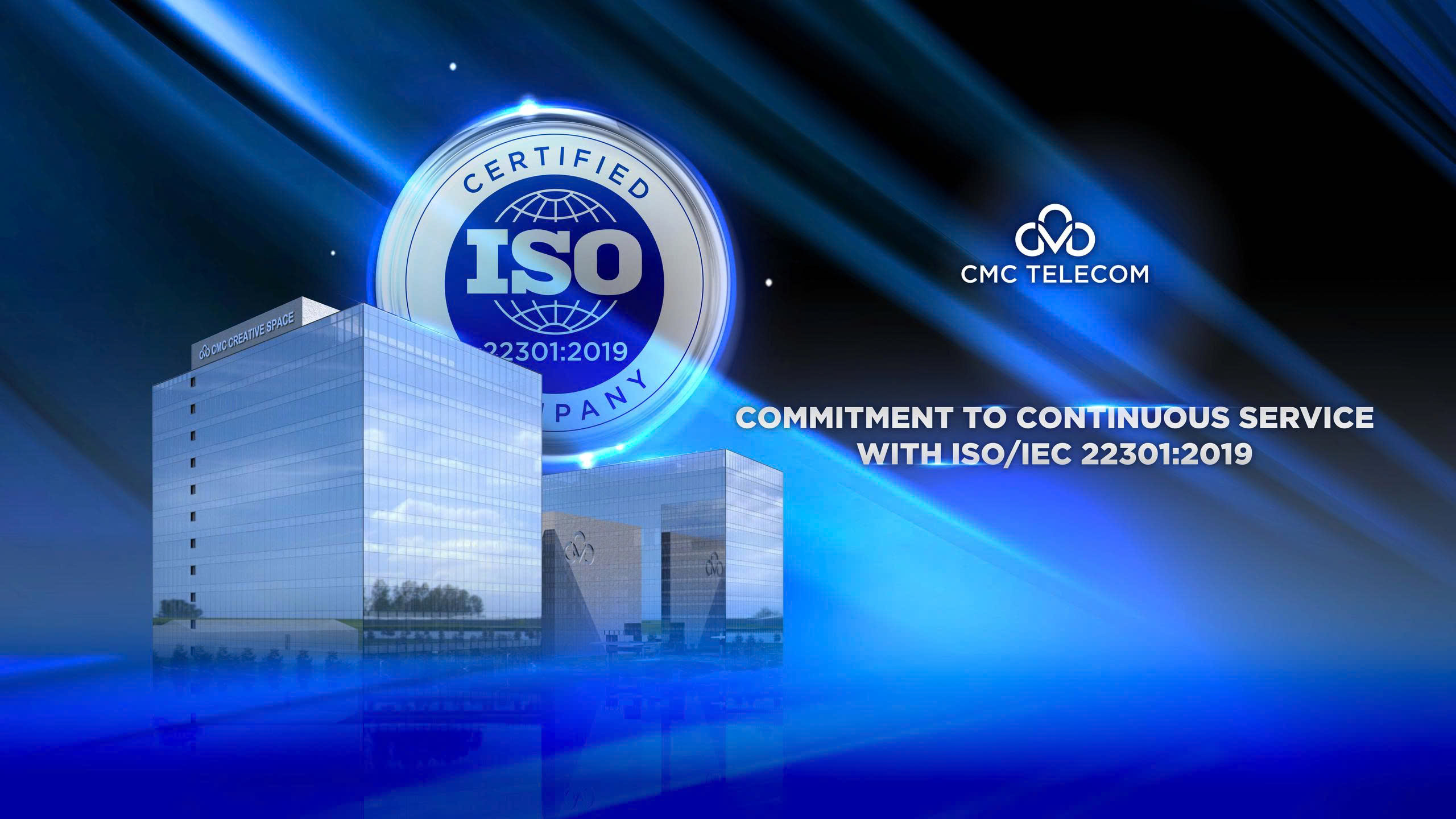 Commitment to Continuous Service with ISO/IEC 22301:2019
In recent years, the world has repeatedly witnessed large-scale disruptions — pandemics, cyberattacks, telecom infrastructure failures, power outages, and international cable breaks. In 2024 alone, intentional Internet shutdowns caused an estimated $7.69 billion in global economic losses. Within the data center sector, more than 54% of organizations reported major incidents costing over $100,000, and 16% suffered damages exceeding $1 million. No matter how much is invested in technology, even a momentary outage can cripple operations. As natural disasters, epidemics, and cyber threats simultaneously intensify, operational resilience and continuity have become vital survival criteria for digital service providers.
CMC Telecom’s attainment of ISO/IEC 22301:2019 is clear evidence of its robust risk management framework. ISO 22301 is not just a compliance checklist — it is a comprehensive methodology encompassing risk identification, impact assessment, response planning, resource assurance, regular drills, and continuous improvement. This provides the foundation for building an “operational resilience” system — a core concept in the telecommunications sector.
According to CMC Telecom representatives, meeting this standard required synchronizing all technical, infrastructure, and customer support units under a unified business continuity management system (BCMS). This included setting up multi-zone redundancy models, 24/7 monitoring systems, incident response procedures aligned with SLAs, and continuously updated service recovery plans. The company also conducts multiple simulation drills for realistic scenarios such as natural disasters, fires, power outages, DDoS attacks, and international cable disruptions to ensure readiness across teams.
In the digital infrastructure and telecom sector, resilience is not merely a technical capability but also a matter of user trust. Businesses — particularly in finance, e-commerce, and logistics — have high expectations for service stability, as any incident could trigger a chain of costly disruptions. Thus, ISO/IEC 22301:2019 serves as a crucial benchmark for assessing the reliability of infrastructure providers.
Currently, CMC Telecom operates three internationally certified data centers in Hanoi and Ho Chi Minh City and possesses large-capacity international telecommunications infrastructure. Operating under the BCMS framework enables the company to maintain uninterrupted services even in the most complex scenarios. A CMC Telecom spokesperson emphasized:
“We consider operational safety to be our DNA. The ISO/IEC 22301:2019 certification is the foundation that ensures every customer can trust us with their critical infrastructure.”
Notably, this standard extends beyond core infrastructure to encompass CMC Telecom’s technology services such as cloud computing, information security, and IT system management. Each service is designed according to the principles of business continuity, enabling clients to sustain operations even amid unexpected risks. This consistency reflects the company’s philosophy: “Your Digital Safety – Our DNA.”
The achievement of ISO/IEC 22301:2019 once again reaffirms CMC Telecom’s commitment to becoming Vietnam’s leading provider of secure, stable, and trustworthy digital services. From enhancing security and investing in infrastructure to building a comprehensive ecosystem of cloud, data center, and international connectivity, the company prioritizes safeguarding customer operations. In the future, CMC Telecom will continue to refine its governance system according to international standards, expand its technologies, and strengthen resilience to remain the trusted digital infrastructure partner for all organizations and businesses.